
By Gemma Ortwerth
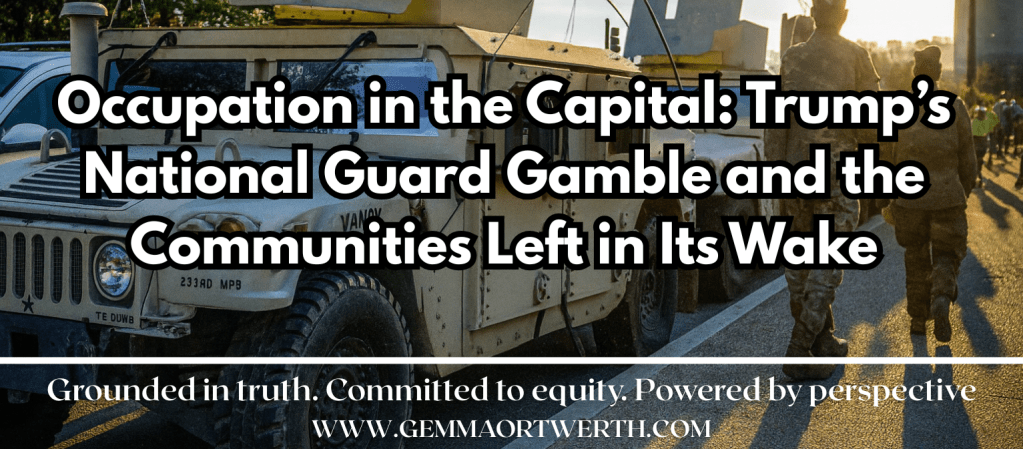
A City Under Federal Control
On Aug. 12, 2025, President Donald Trump invoked his authority under the D.C. Home Rule Act to take control of the District’s National Guard. Citing a “crime emergency,” he deployed troops into the streets, bypassing local leadership and suspending elements of self-governance for more than 700,000 residents who have no voting representation in Congress.
The move was not isolated. Earlier this summer, the Trump administration intervened in Los Angeles under the same justification. In both cases, the narrative followed a pattern: declare an exaggerated crisis, use it to sideline local authorities, and frame the action as protection.
Crime data in D.C. shows no unprecedented surge. While some categories have risen slightly, others have declined. Fact checks from CNN, BBC, and Al Jazeera confirm that Trump’s portrayal is misleading. The reality on the ground is far from the war zone described in his speeches.

Federal Power Without Consent
The D.C. Home Rule Act gives residents limited self-government, but Section 740 allows the president to assume control of the Guard in certain emergencies. This means D.C.’s autonomy can disappear with a single order from the White House.
Past examples show the danger of this clause. From the civil rights crackdowns of the 1960s to the 2020 Lafayette Square incident, federal control of local forces has often been used against communities calling for change. In D.C., a majority-Black city, the stakes are even higher.
Trump’s federalization order was more than a legal step. It was a political statement aimed at a city that has consistently rejected him at the ballot box. It sent a message that local governance can be overridden when it is politically convenient.
Communities Under Guard
The National Guard presence has been most visible during “clean-up” operations targeting encampments of unhoused residents. Reporting from The Washington Post shows these sweeps have displaced people with little notice, dismantling tents and scattering possessions.
Research from the American Psychological Association finds that forced removals worsen instability, harm physical and mental health, and erode trust in public institutions. Many of those affected in D.C. are Black, disabled, or LGBTQ+, placing them at heightened risk during such actions.
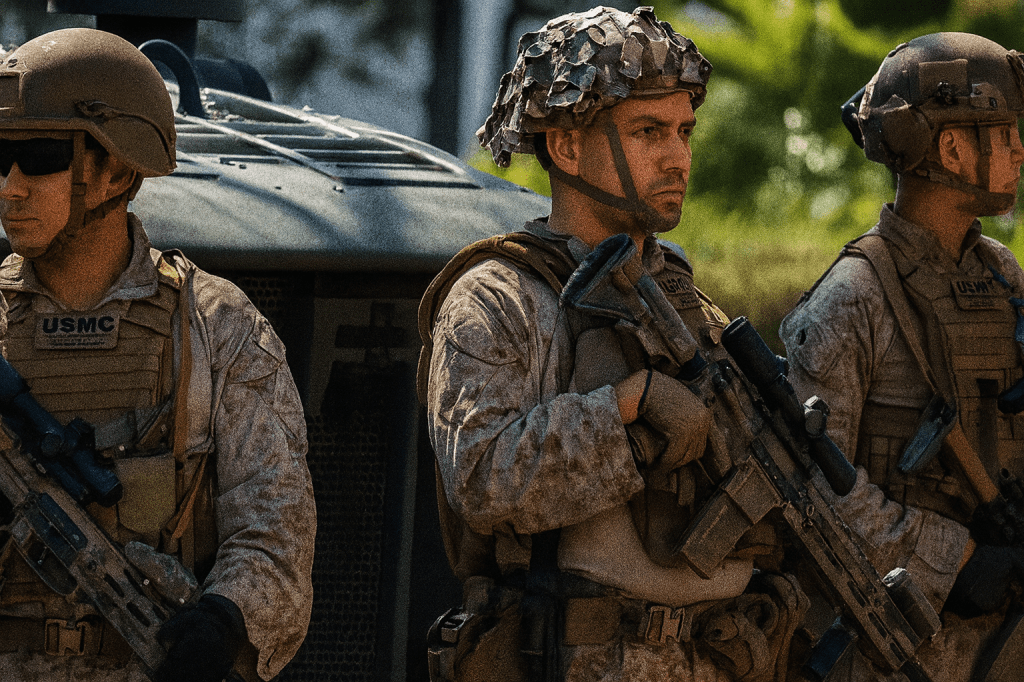
For visibly queer and trans residents, especially trans women, the danger is immediate and intensified. In a political climate where trans people are scapegoated and villainized, the arrival of armed forces in public spaces can magnify the risk of harassment, violence, and profiling. Historical patterns show that militarized enforcement often targets those who are most marginalized, making public space even less safe for people whose existence is already under attack.
The Language of Harm
Trump has described D.C. residents as “bloodthirsty criminals” and “animals.” Language like this dehumanizes entire communities and makes it easier to justify state violence. It frames people not as citizens with rights, but as threats to be controlled or removed.
Trauma-informed research shows that repeated exposure to dehumanizing rhetoric has lasting effects. It shapes public opinion, normalizes discriminatory attitudes, and influences how law enforcement and military personnel treat the communities they police. For marginalized groups, especially trans women and people experiencing homelessness, such language is not abstract. It is a warning that their safety is negotiable in the eyes of those in power.
Historical Echoes
This use of federal force is part of a long tradition. In the United States, “law and order” politics have repeatedly justified the deployment of troops or militarized police against communities of color, labor movements, and political dissenters.
Globally, similar tactics have marked authoritarian shifts. From the suppression of pro-democracy protests abroad to the targeting of Indigenous land defenders, the pattern is consistent: once armed control of civilian spaces is normalized in one context, it becomes easier to justify in others. These parallels matter because they show that what happens in D.C. does not stay in D.C. It sets precedent.
Policing as a System
Some argue these deployments are about safety. History tells another story. Policing in the United States grew from slave patrols and strike-breaking forces. It has always been shaped to protect those in power, not those most at risk. Saying there are “good officers” does not erase the fact that the system was built on inequity and continues to enforce it.
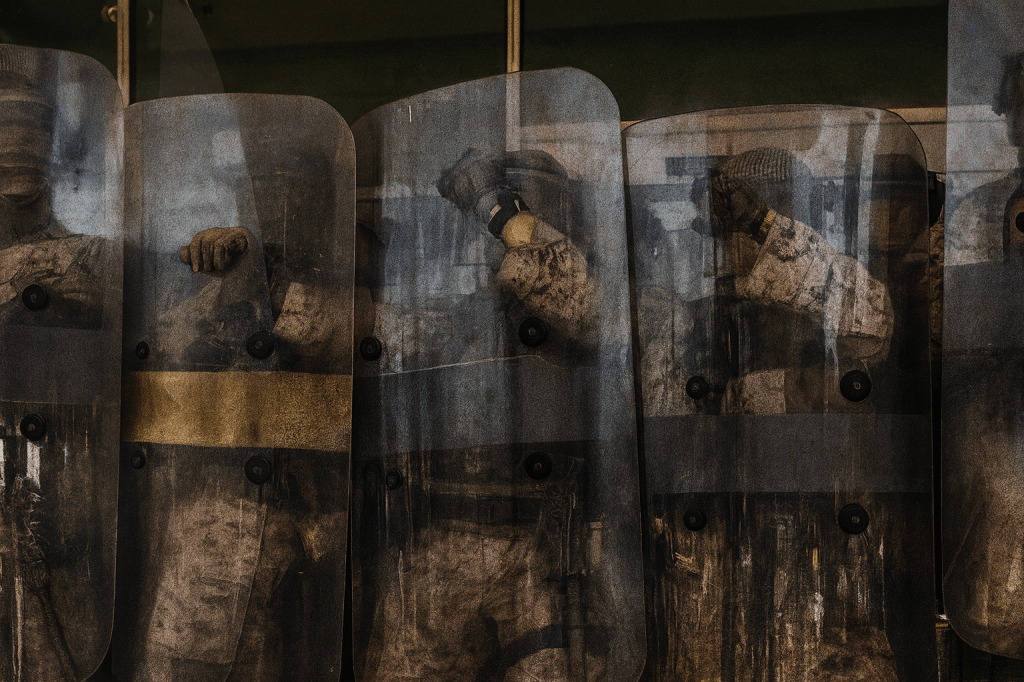
When the National Guard is used as a domestic police force, it inherits those same biases. Militarization escalates tension, criminalizes poverty, and silences dissent. It does not address the root causes of harm.
Overreach and Complicity
The Los Angeles deployment earlier this summer followed the same script as in D.C. Both framed local problems as crises that required federal control, sidelining community solutions. This is governance by spectacle, not substance.
Democrats have voted against almost every action of this kind, but both parties have contributed to the expansion of executive power and militarized policing over decades. Many Republicans who once criticized Trump now support him, choosing loyalty or self-interest over their duty to the public.
Structural Injustice in D.C.
This deployment highlights the injustice of D.C.’s political status. Residents pay taxes, serve in the military, and contribute to the economy, yet lack full voting rights in Congress. Federal control of the Guard reminds them that their autonomy is conditional, subject to the president’s will.

Alternatives to Militarization
Emergency powers should be limited in scope and duration. Real safety comes from stable housing, access to healthcare, quality education, and public spaces free from intimidation.
Investing in housing-first policies, trauma-informed crisis teams, and community-based safety programs addresses harm at its roots. These approaches protect dignity while building trust.
Policy change must be paired with organizing. Communities must stand together, resist displacement, and recognize that eroding one group’s rights puts everyone at risk. If you think this will never affect you, you are mistaken. If you believe privilege will shield you forever, you are part of the problem.
The Alarm Bells
What is happening in Washington, D.C., is not just a local issue. It is a warning about how quickly rights can be suspended and force used in place of dialogue. Authoritarianism rarely arrives all at once. It grows in moments like this, normalized by repetition.
The people of D.C. deserve safety, not occupation. The unhoused deserve dignity, not removal. Marginalized communities deserve protection that is not conditional on politics.
This is the moment for vigilance and for action rooted in solidarity. Because if we do not resist now, the next deployment could be anywhere. By the time it reaches your street, it may already be too late.
Kaleidoscope Collective Magazine
 Gemma Ortwerth
Leave a comment