

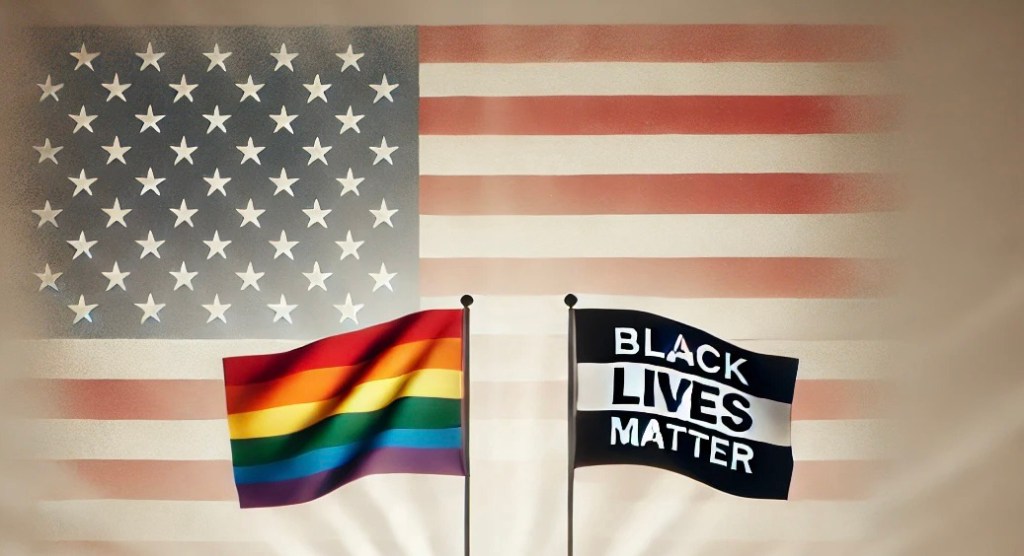
Since taking office, former President Donald Trump’s actions have repeatedly claimed to champion “the people,” yet his policies tell a different story—one that disproportionately harms marginalized communities and undercuts the fabric of equity, inclusion, and justice. While his supporters insist his presidency was for everyone, a closer look at his administration’s track record reveals systemic harm to LGBTQ+ individuals, BIPOC communities, and ultimately, all Americans.
Eroding LGBTQ+ Protections
Under Trump, the rollback of LGBTQ+ rights was swift and deliberate. From banning Pride flags at U.S. embassies to erasing federal recognition of transgender individuals, his administration took symbolic and policy-driven steps to diminish the visibility and rights of LGBTQ+ people. Supporters defended these actions as neutral and patriotic, arguing, “A national flag should be enough to represent everyone.” Yet, this logic ignores the systemic inequities these communities face. Symbols like the Pride flag exist not to replace the national flag, but to highlight the ongoing fight for equality and to amplify voices that are often silenced.
For LGBTQ+ individuals, the Pride flag represents their struggle to live openly without fear of violence or discrimination—a struggle made harder by policies like Trump’s ban on transgender individuals serving in the military and his administration’s removal of protections for transgender students in schools. These actions sent a clear message: inclusion was not a priority.
A Broader Impact: Systemic Racism and Disregard for Equity
Trump’s policies also exacerbated systemic racism and inequality for BIPOC communities. Immigration enforcement under his administration included mass deportations and the targeting of sanctuary cities, creating fear and instability in immigrant families. These actions disproportionately affected Black and Brown communities, yet some supporters dismissed these concerns with statements like, “What can they not do that I can?”
The answer lies in the systemic barriers these communities face. BIPOC individuals are more likely to encounter discrimination in housing, education, healthcare, and employment—barriers that are intensified when leaders like Trump dismantle protections and programs meant to address these inequities. His administration’s elimination of diversity, equity, and inclusion (DEI) programs in federal institutions further illustrated a prioritization of power over progress.
Environmental Rollbacks and Their Far-Reaching Consequences
Environmental protections were also gutted during Trump’s tenure, from rolling back regulations on clean water to withdrawing from the Paris Climate Agreement. These decisions not only threaten the planet’s future but disproportionately harm low-income and marginalized communities, who are often most affected by pollution and climate disasters. Policies prioritizing corporate interests over public health serve as yet another reminder of how his administration’s decisions failed to consider the broader impact on everyday Americans.
The Myth of “For the People”
Supporters of Trump often frame his actions as benefiting the American people, claiming that moves like removing the Pride flag or rolling back DEI programs are about “unity” and “ending identity politics.” But as one social media commenter pointed out, “Taking these flags down doesn’t end identity politics—it just ensures that only their identity gets to dominate the narrative.”
This myth of unity is a deflection. By prioritizing a narrow, exclusionary vision of America, Trump’s administration repeatedly undermined the ideals of equity and inclusion. True patriotism isn’t about erasing diversity—it’s about embracing it. Leadership that seeks to divide rather than unify fails to serve all Americans, regardless of political affiliation.
A Call for Reflection
The harm caused by Trump’s policies extends beyond marginalized communities—it affects all Americans. Rolling back environmental protections, restricting healthcare access, and fueling division weakens the nation as a whole. These policies prioritize short-term political gains over long-term progress, leaving future generations to grapple with the consequences.
As we reflect on the past and look toward the future, it’s crucial to remember that silence and complicity enable oppression. History will not remember kindly those who supported exclusion and erasure under the guise of patriotism. Instead, progress will come from those who recognize the humanity of all people and advocate for a country that lives up to its promise of liberty and justice for all.
Sources:
1. Business Insider: Elon Musk and AfD’s Far-Right Agenda
2. The Guardian: Trump’s Impact on Environmental Protections
3. ACLU: Trump Administration’s LGBTQ+ Rollbacks
4. Washington Post: How Trump’s Policies Harm Marginalized Communities
5. American Immigration Council: The Effects of Trump’s Immigration Policies.
By acknowledging these realities, we can collectively work toward a future where inclusivity and equity aren’t just ideals but actions. The path forward demands reflection, accountability, and unwavering advocacy for marginalized voices.
 Gemma Ortwerth
Leave a comment